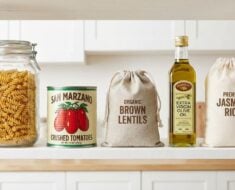
Teachers and tutors rarely have time for long shopping trips or elaborate meal planning. A well-stocked pantry solves much of that problem. When the basics are already in the cupboard, a tired evening can end with a simple, nourishing meal rather than a takeaway order. This article explains how to choose pantry staples, organise them for quick access, rotate stock so nothing expires unnoticed, and build a shopping routine that fits a crowded week.
Choose Staples That Earn Their Space
A useful pantry contains ingredients that combine well and last a long time. Dried pasta, rice, oats, lentils, tinned beans, tinned tomatoes, stock cubes or powder, dried herbs, and a few jars of sauce cover many quick meals. Think about the dishes you actually cook rather than the ones you admire in magazines. If you rarely bake, skip the specialist flours. If you often make soup, keep more lentils and onions on hand. Many home cooks find that a short, honest list keeps the cupboard useful rather than cluttered with ingredients that never get used.
Organise for Fast Decisions
Storage layout influences how often you cook from the pantry. Place everyday items at eye level and move less-used ingredients to higher or lower shelves. Use clear containers for dry goods so you can see when supplies run low. Keep oils and vinegars near the cooker, and group spices by cuisine or alphabetically. A simple chart on the inside of a cupboard door can list what is stocked and what needs replacing. Good organisation reduces decision fatigue, which matters when you have spent the day answering questions and marking work.
A short checklist makes restocking easier:
1. Check dates on jars, tins, and packets once a month.
2. Keep one backup protein, such as tinned fish or dried beans.
3. Buy a few fresh items each week, such as onions, carrots, and leafy greens.
4. Note any staple you used up, so it goes straight onto the next list.
Rotate Stock Before It Expires
Rotation keeps the pantry honest. Move older items to the front and place new purchases behind them. This habit is simple, but it prevents the familiar surprise of finding an out-of-date packet at the back of the shelf. Dried goods such as rice and pasta often keep for a long time, though their flavour and texture can fade. Oils can turn rancid when stored in warm places, so keep them away from the oven and the sunniest window. Many people find it helpful to write the date of purchase on the packet with a marker. Readers may also want to visit bestwirelesssecuritycamera.
Labels also help when several people use the same kitchen. A family member who wants to make tea should be able to find the sugar without asking, and a shared shelf for snacks prevents duplicate purchases. Keep a basket for items that need using soon, such as a half-used tin or a bag of salad leaves, and cook from that basket first. Once a month, take everything out of the cupboard, wipe the shelves, and check each container. This short task takes less time than many people expect, and it often reveals useful ingredients that were simply hidden at the back.
Shop With a Simple Routine
Choose one regular time for shopping, ideally a day when your schedule is lighter. Bring a written list organised by store section, which saves time and reduces impulse buys. Avoid stocking large quantities of items you rarely use, even when they seem like a bargain on the shelf. A small notebook or a shared note on your phone works well for adding items as you run out. You can also visit Arab Tek for more reading.
Pantry planning also helps during crowded weeks. If a parents’ evening runs late, a tin of beans, a jar of sauce, and a packet of pasta can become a satisfying dinner in a short time. Keep a few quick recipes written on a card so you do not have to search online while tired. For a related read on this site, see Nut-Free Snack Ideas That Pass Strict School Rules.
On the most exhausted evenings, it helps to have a default meal that needs almost no thought. A pot of lentil soup, a jacket potato with a simple filling, or a bowl of pasta with a tin of tomatoes can be prepared while the kettle boils. Write your default meals on the same card as your quick recipes, so you remember that they exist. Repeating these meals is not a failure. It is a sensible way to protect your energy for the parts of the week that matter most to you and the people you teach.
Finally, a pantry is a tool for calm rather than a test of perfection. Some weeks you will run short, and that is normal. Restock gently, keep the basics well organised, and enjoy the small relief of opening a cupboard that already has a plan inside it.